The chatbot speed gap that can decide whether a shopper buys or bounces.
One competitor case study celebrates a 6-second response time. Sellbot AiML can answer in 2.733 seconds with a product-rich chat experience that puts images, options, and pricing in front of the customer before intent cools off.
Sellbot AiML response
2.733s
A visual recommendation experience that feels immediate.
Competitor case study
6s
Good is not the same as fast enough for modern shopping behavior.
Time saved
3.267s
That is extra attention you can spend on trust, fit, and conversion.
Less waiting
54.4%
The difference between a shopper pausing and a shopper moving forward.
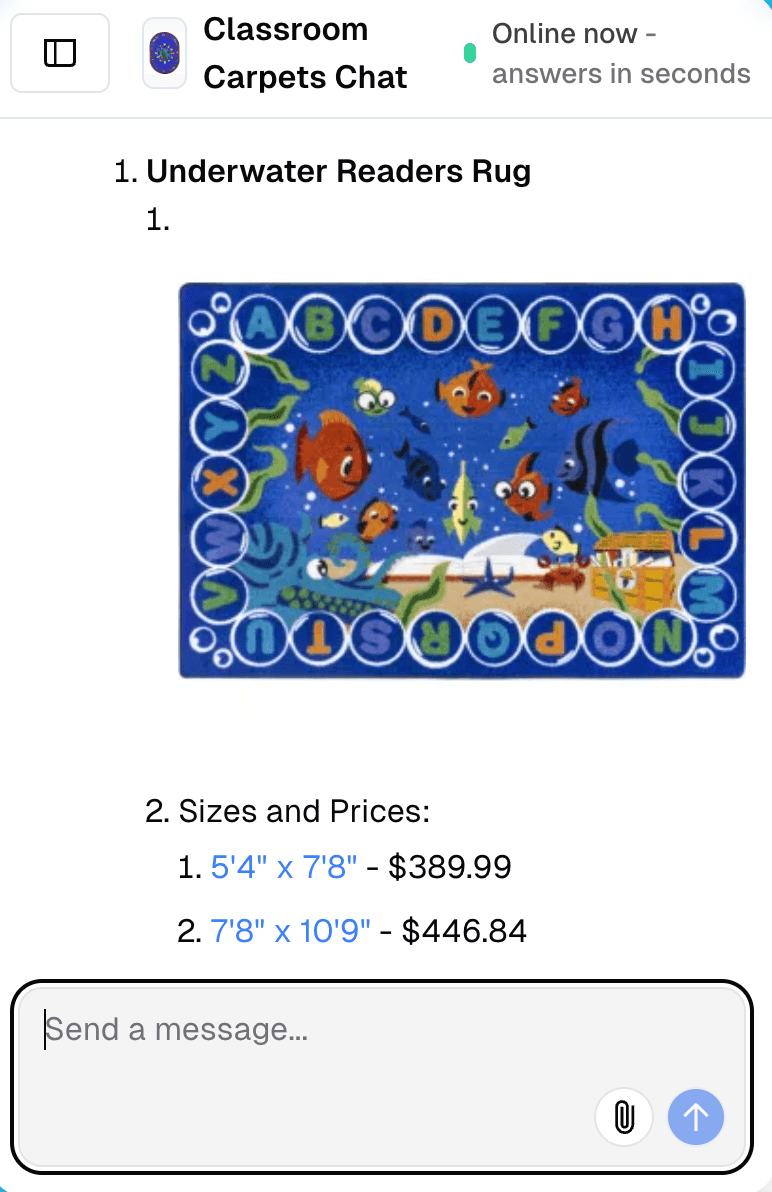
Waiting is not neutral in ecommerce.
A shopper who asks for help is showing intent. That is the exact moment a great ecommerce chatbot should prove value fast: show a product, show a fit, show a path forward. If the customer is left waiting, the chat starts feeling like friction instead of assistance.
Sellbot AiML does not just answer quickly. It answers visually. That changes the experience from “chatbot conversation” to “guided shopping.”
Response-time comparison
Faster answers preserve buying momentum.
Sellbot AiML visual recommendation
2.733s
Competitor case study response time
6.000s
Typical attention threshold to make your value clear
10.000s
Head start
3.267s
More time to engage the shopper before attention starts to drift.
Relative gain
54.4%
Less waiting compared with a 6-second chatbot experience.
This is not a chatbot that talks about products. It sells with products.
The fastest way to make a chatbot feel real is to make it visual. When the customer sees an actual rug, an actual backpack, or an actual product option inside the conversation, the experience becomes concrete immediately.
It shows the product, not just the promise
A shopper asking about a rug or backpack should not have to imagine the answer. The answer should arrive with a product image, clear option labels, and pricing that makes the next step obvious.
It reduces the gap between curiosity and confidence
The longer a shopper waits, the more likely they are to tab away, compare elsewhere, or simply lose momentum. Fast recommendations protect buying intent while it is still hot.
It feels like a sales assistant, not a stalled search box
A fast visual chat tells the customer they are in the right place immediately. It proves the system understands product intent, style, color, size, and use case in real time.
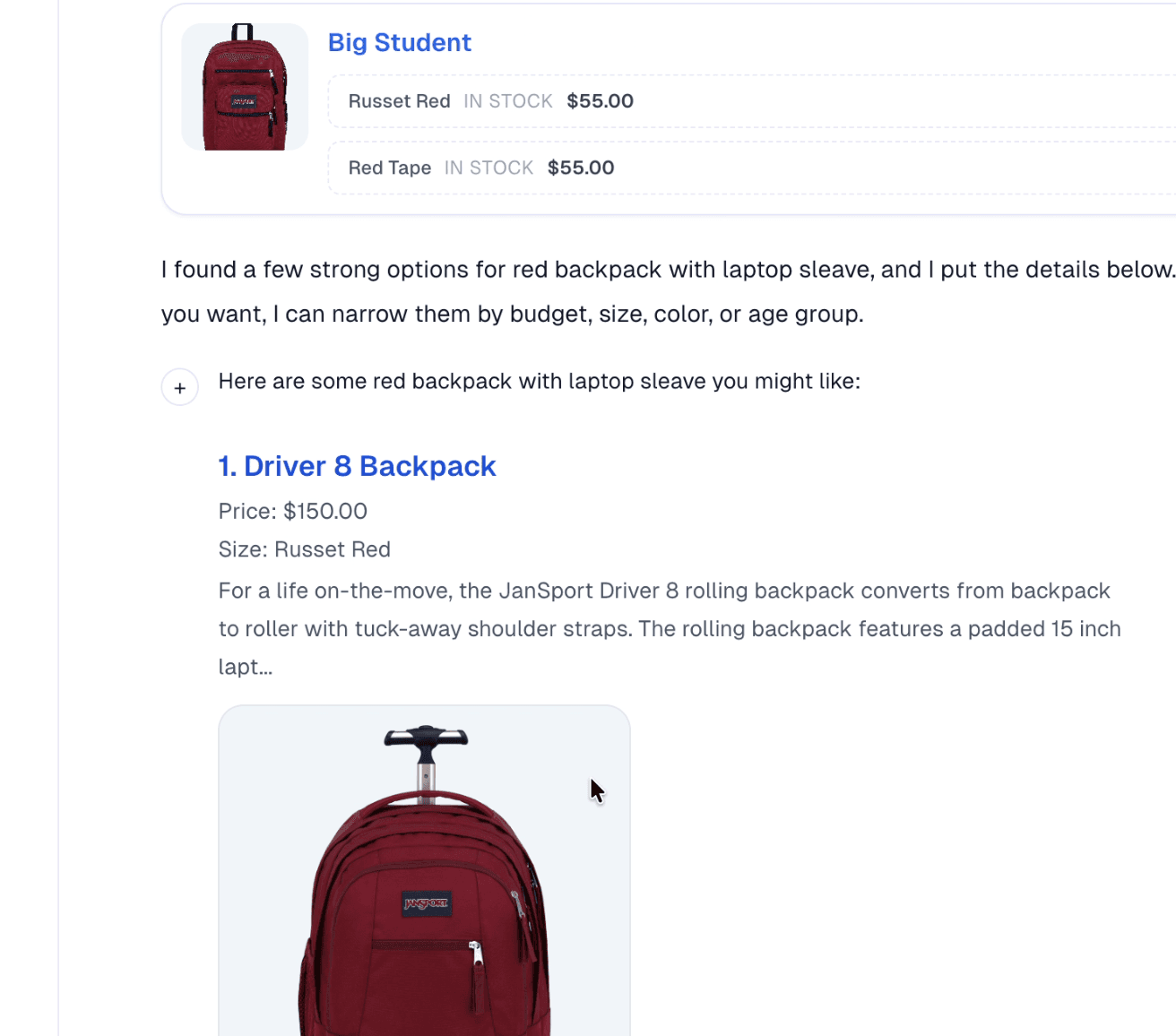
The image inside the open chat is the hook.
Showing a strong product card or hero product image inside the chat window does something important in the first glance: it tells the shopper this is not a generic support bot. It is a shopping assistant that can actually merchandise.
In the backpack example, the user asks for a red backpack with a laptop sleeve and quickly sees a matching red Jansport option. That kind of response is not just fast. It is emotionally reassuring. The customer instantly feels understood.
First impression
“This bot knows products.”
Conversion effect
Less searching. Faster decisions.
Three products in under two seconds is not a flex. It is the new standard.
Modern shoppers move fast, compare fast, and leave fast. A chat experience that can surface several relevant products almost immediately gives the shopper something worth staying for. That is how you turn a chat widget from an afterthought into a revenue channel.
Step 1
Ask naturally
“Show me an underwater classroom rug” or “I need a red backpack with laptop sleeve.”
Step 2
See products fast
Deliver matching products with images, sizes, color options, and pricing while the shopper is still engaged.
Step 3
Move to checkout
The conversation stops feeling like search and starts feeling like guided buying.
Ordinary chatbot vs. Sellbot AiML
The difference is not only milliseconds. It is what those milliseconds allow you to do inside the chat before the shopper disappears.
Faster is better. Visual is better. Faster plus visual is where ecommerce wins.
The real opportunity is not merely answering questions. It is capturing intent in the tiny window between curiosity and exit. That is where Sellbot AiML is built to operate.
A chatbot that responds in 2.733 seconds with product images, variants, pricing, and recommendations is doing something much bigger than reducing support load. It is protecting the moment that drives revenue.
In ecommerce, that can absolutely be the difference between a customer and a bounce.
Questions store owners ask about chatbot speed
Why does chatbot speed matter so much in ecommerce?
Because ecommerce is intent-driven. People arrive with a product in mind, a problem to solve, or a category to browse. A slow answer gives them time to doubt, compare, or leave. A fast answer keeps the shopping flow alive.
Why show full product images inside the chat?
Because images answer questions faster than text alone. The customer instantly sees whether the recommendation feels right, which makes the chat feel more like guided shopping than generic customer support.
Is a few seconds really a big difference?
Yes. Moving from 6 seconds to 2.733 seconds removes 3.267 seconds of friction. In a channel where attention is short and intent is fragile, those seconds can be expensive to waste.
Give your shoppers answers that look like products, not delays.
Sellbot AiML is built for stores that want fast, beautiful, product-first conversations. When customers ask, your store should answer with confidence immediately.
Fast visual commerce
2.733s
Waiting avoided
3.267s
Core promise
Show the right product inside the chat before the customer has time to leave.